
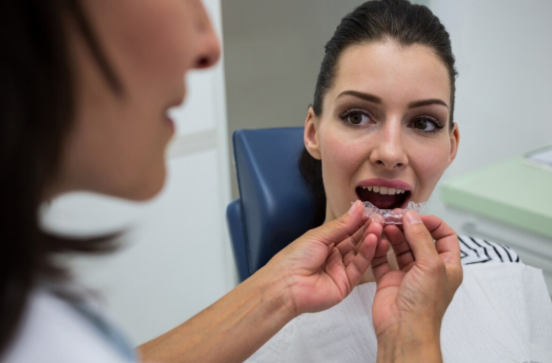
A confident smile plays an important role in everyday life. It improves first impressions, communication, and boosts personal confidence. Many people want straighter teeth but hesitate to choose traditional braces because of their appearance and inconvenience.
Modern orthodontic technology has created new solutions that allow individuals to align their teeth in a more comfortable and discreet way. Clear aligner therapy has become a popular option for people who want a straighter smile without metal brackets or wires.
Choosing the right dentist for getting these aligners is highly important. A skilled professional understands how teeth move, how to monitor progress, and how to adjust treatment when necessary. The right provider ensures the entire process remains safe, comfortable, and effective.
The following are 5 tips that make it easier to select the right provider for clear aligner therapy. Read on.
Verify Professional Credentials
Professional credentials provide important insight into a dental professional’s qualifications. Proper training ensures that the provider understands both general oral health care and the principles of orthodontic tooth movement.
Dental education requires years of academic study combined with clinical practice. Many professionals also pursue continuing education programs to stay updated on new techniques and technologies.
Invisalign treatment requires additional knowledge beyond general dentistry. Treatment planning involves digital modeling, bite analysis, and precise alignment sequencing. Providers who regularly attend orthodontic training courses develop stronger expertise in these areas.
Evaluate Experience With Clear Aligners
Experience plays a major role in treatment success. A dentist who regularly provides aligner therapy develops a deeper understanding of how teeth respond to gradual movement.
Each orthodontic case presents unique challenges. Some patients require minor corrections, while others need more complex adjustments involving multiple teeth or bite alignment.
Providers with extensive experience can identify potential challenges early in the planning process. Their familiarity with different cases allows them to design treatment plans that address individual needs effectively.
Review Technology and Diagnostic Tools
Modern orthodontic care relies heavily on advanced dental technology. Digital imaging and scanning systems allow professionals to capture detailed models of the teeth and jaw structure.
Traditional dental impressions required patients to bite into soft molding materials that could feel uncomfortable. Today, digital scanners capture highly accurate images within minutes.
These digital models allow professionals to analyze tooth alignment with remarkable precision. Computer software can simulate how teeth will move throughout treatment, creating a visual representation of the final result.
Consider Communication Style
Clear communication between patients and dental professionals plays a crucial role in treatment success. Orthodontic care requires several months of gradual tooth movement, and patients must follow specific instructions throughout the process.
A supportive dental professional takes time to explain the treatment plan clearly. Patients should understand how aligners work, how often they must be worn, and when they should be replaced with the next set.
Analyze Patient Reviews
Patient feedback offers valuable insight into the quality of dental care provided by a clinic. Online reviews and testimonials often reveal how previous patients experienced their treatment journey.
Positive feedback frequently highlights qualities such as professionalism, attention to detail, and friendly staff interactions. Many patients also mention how clearly their provider explained each stage of treatment.


