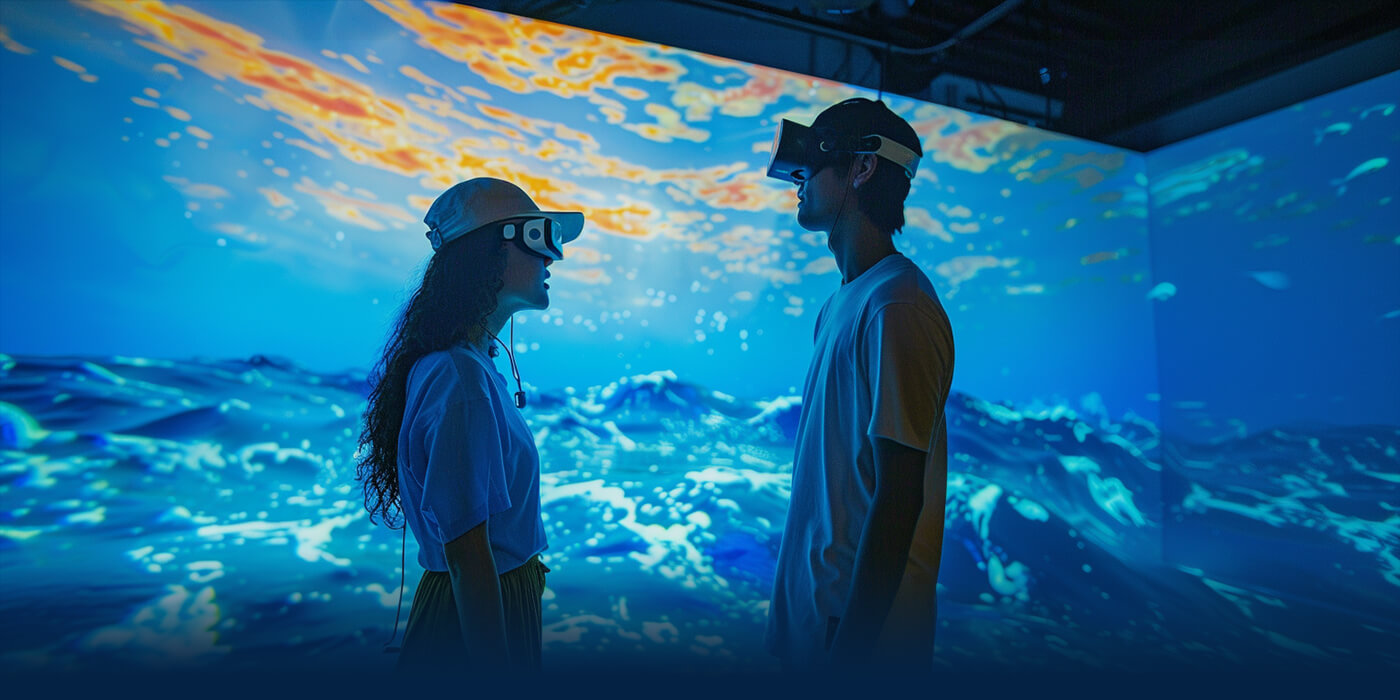
Most screens still make you watch from the outside, and that gap is starting to feel old. Virtual Reality Trends are changing how Americans train, shop, learn, play, and meet because the best digital moments no longer sit flat behind glass. They wrap around you, respond to your movement, and make your brain treat pixels like a place.
That shift matters for U.S. brands, schools, healthcare teams, and creators trying to build stronger digital trust. A buyer can walk through a home before driving across town. A nurse can practice a hard procedure before touching a patient. A customer can explore a product in a way no photo gallery can match. For companies building visibility through digital brand growth, VR is no longer a strange side experiment. It is becoming a new layer of customer experience.
The real story is not goggles alone. It is behavior. People want digital tools that feel less distant, less flat, and less forgettable. VR wins when it gives people confidence before they act in real life.
Virtual Reality Trends Are Moving From Novelty to Practical Daily Use
A few years ago, VR often felt like a weekend demo at a mall kiosk. Fun, sure, but easy to dismiss. That has changed because Americans now expect digital tools to save time, reduce risk, and make choices clearer before money changes hands.
Why U.S. Consumers Want More Than Entertainment
Entertainment opened the door, but utility is what keeps VR in the room. A family in Denver checking a vacation rental can step through the layout before booking. A parent buying furniture can see scale instead of guessing from a product photo. Those moments remove doubt, and doubt is where many online purchases die.
Immersive technology works best when it answers the quiet questions people do not always say out loud. Will this fit? Will this feel right? Am I making a mistake? A flat webpage can explain, but virtual reality experiences can make the answer feel immediate.
That does not mean every brand needs a full VR world. Some need a focused product room, a training scene, or a guided simulation. The winning move is smaller than most people think: solve one high-friction decision better than a normal screen can.
How Practical VR Changes Buyer Confidence
Confidence is the hidden currency of digital business. When people feel unsure, they delay, compare, and disappear. VR can shorten that hesitation because it turns abstract claims into direct experience.
A car shopper in Texas may not care about every technical detail of a new SUV. But sitting inside a virtual cabin, checking sightlines, and comparing cargo space can feel more useful than reading another feature list. That is where digital simulation earns its keep.
The unexpected part is that VR often works by slowing the buyer down. Fast pages push people to skim. A well-built VR experience invites them to inspect, turn, test, and notice. Slower attention can create faster decisions.
Immersive Digital Experiences Are Reshaping Training and Education
Learning changes when mistakes stop being dangerous. That is why immersive digital experiences have become so attractive to schools, employers, hospitals, and public safety teams across the United States. They let people practice under pressure without paying the full cost of failure.
Why Training Feels Different Inside a Simulation
A worker can read a safety manual and still freeze in a noisy warehouse. A medical student can memorize steps and still feel unsteady during a live procedure. VR adds body memory to the learning process, which makes lessons stick in a different way.
Take a utility crew preparing for storm damage in Florida. A VR scene can recreate downed lines, blocked roads, poor visibility, and decision pressure without putting anyone in danger. The crew does not only learn what to do. They learn how the moment feels.
That emotional layer matters. People often fail not because they lack facts, but because the situation overwhelms them. Good VR training helps the brain rehearse the stress before the real day arrives.
What Schools and Employers Must Get Right
VR in education should never become a shiny substitute for weak teaching. A headset cannot rescue a lazy lesson. The strongest programs use VR for moments where presence, scale, or repetition changes the outcome.
A high school history class might walk through a reconstructed civic setting to understand public debate. A manufacturing trainee might repeat a machine shutdown until the sequence becomes natural. A nursing student might practice patient communication, not only procedure.
The counterintuitive lesson is simple: VR should not be everywhere. It should appear where the old method leaves a gap. When schools and employers treat it as a tool instead of a spectacle, students feel the difference fast.
Brands Are Building Trust Through Virtual Spaces
Trust online has become harder to earn because users have seen too many polished claims. They want proof. Virtual spaces can offer that proof when they let people explore instead of merely believe.
How Retail and Real Estate Benefit From Presence
Retail has always fought the limits of distance. You cannot feel fabric through a screen, judge scale from a cropped image, or sense how a room flows from ten photos. VR does not solve everything, but it gets closer to the questions shoppers care about.
A real estate agent in Phoenix can guide an out-of-state buyer through a property before scheduling an in-person visit. The buyer can notice hallway width, room connection, light direction, and closet depth. Those small details can separate serious interest from casual browsing.
The odd truth is that VR may reduce wasted sales activity. Fewer people show up with the wrong expectations. Fewer customers return items because the product felt different at home. Better preview means cleaner intent.
Why Brand Storytelling Needs Restraint
Some brands ruin VR by trying to impress too hard. They add floating menus, dramatic effects, and needless movement until the user feels trapped in a tech demo. That is not storytelling. That is noise with a headset.
Strong virtual reality experiences respect the user’s attention. A home improvement brand might build a calm kitchen planning room. A fitness company might create a guided form-check space. A tourism board might let travelers explore a few real-feeling locations instead of dumping them into a fantasy map.
The best branded VR does not scream, “Look what we built.” It quietly helps the user understand something better. That restraint feels rare, and rarity builds trust.
The Future of VR Depends on Comfort, Access, and Better Design
Technology does not win because it exists. It wins when people can use it without friction. VR still has barriers, and smart companies should be honest about them instead of pretending every American household is ready to live inside a headset.
What Still Holds VR Back in Everyday Life
Comfort remains a serious issue. Some users feel eye strain, motion sickness, or fatigue after longer sessions. Others do not want another device to charge, update, clean, and store. Those are not small complaints. They decide whether VR becomes a habit or a drawer item.
Cost also shapes adoption. A school district in rural Kansas may see the value of VR training, but hardware, content, IT support, and teacher onboarding all require planning. A small business may love the idea of a virtual showroom, then pull back when maintenance becomes clear.
The surprise here is that simpler VR may spread faster than richer VR. Shorter sessions, lighter design, and clearer goals can beat huge virtual worlds that ask too much from the user.
Where Better Design Will Take VR Next
The next stage will reward designers who understand human patience. People do not want to learn strange controls every time they enter a digital space. They want natural movement, readable instructions, and a clear reason to stay.
Healthcare, job training, home design, travel planning, and remote teamwork all have room to grow. A patient might practice physical therapy movements with guided feedback. A contractor might review a renovation plan with a homeowner before demolition begins. A team spread across Chicago, Austin, and Seattle might meet around a 3D product model instead of arguing over screenshots.
Virtual Reality Trends will matter most when they disappear into useful habits. The headset should not be the star. The better decision, safer practice, clearer purchase, or stronger lesson should be the star. Businesses that understand that will build VR people return to, not VR people try once and forget.
Conclusion
The future of VR belongs to the people who stop treating it like a toy and start treating it like a trust-building tool. Americans do not need more digital noise. They need better ways to judge, practice, compare, and understand before making real-world moves.
Virtual Reality Trends point toward a future where digital experiences feel less like browsing and more like testing reality before stepping into it. That will change how homes are sold, how workers train, how students learn, and how customers decide which brands deserve attention.
The smartest next step is not to build the biggest virtual world. It is to find one decision your audience struggles with and make that decision easier through presence. Start there, test carefully, and keep the experience useful before making it larger.
Build VR around human confidence, and the technology will finally earn its place.
Frequently Asked Questions
What are the biggest virtual reality trends in the United States?
Practical use is leading the shift. Retail previews, workplace training, healthcare simulations, real estate tours, and education are gaining attention because they solve clear problems. Entertainment still matters, but business value is pushing VR into more serious U.S. use cases.
How do virtual reality experiences help online shoppers?
They help shoppers judge size, layout, fit, and product context before buying. That can reduce doubt, shorten decision time, and lower returns. The best VR shopping tools focus on confidence, not spectacle, so customers feel guided rather than distracted.
Why is VR useful for employee training?
VR lets employees practice risky, stressful, or complex tasks without real-world danger. It helps people build memory through action, not reading alone. This is useful for healthcare, manufacturing, safety training, emergency response, and technical job preparation.
Can small businesses use VR without a huge budget?
Small businesses can start with focused experiences instead of full virtual worlds. A product preview, guided showroom, training module, or simple 360-degree tour can offer value without heavy spending. The key is choosing one clear customer problem first.
What industries benefit most from immersive digital experiences?
Healthcare, real estate, education, retail, travel, construction, and workforce training benefit strongly. These industries depend on trust, spatial understanding, practice, and confidence. VR helps when people need to see, test, or rehearse before acting.
Is virtual reality only useful for younger audiences?
No. Older users can benefit when the design is simple, comfortable, and useful. Real estate tours, health education, travel previews, and home planning tools can appeal across age groups. Poor design limits adoption more than age does.
What makes a good VR brand experience?
A good VR brand experience solves a real problem quickly. It avoids clutter, confusing controls, and flashy effects that do not help the user. Strong design feels calm, clear, and purposeful, with every scene tied to a decision or action.
How will virtual reality change digital marketing?
VR will push marketing toward experience-based proof. Instead of only telling users what a product, place, or service offers, brands can let people explore it. That shift can build trust faster when the experience feels honest, useful, and easy to understand.