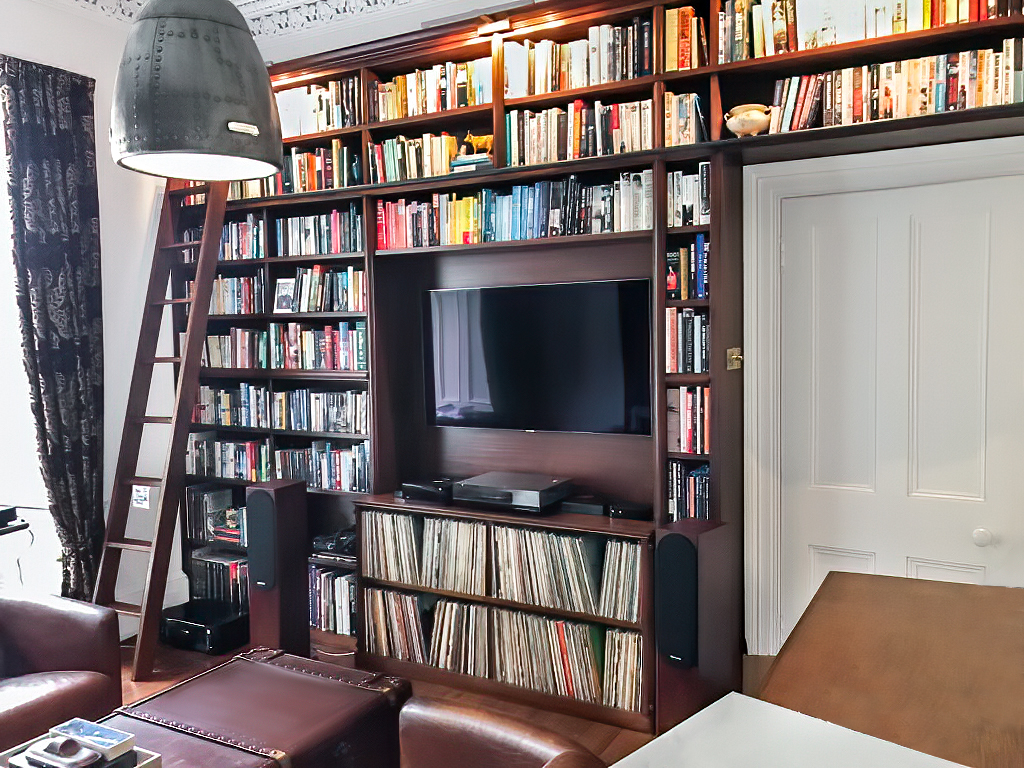
The best brief for a cabinet starts with the possessions you struggle to store, not the wall you want covered. Cabinet makers in Glasgow offer different approaches to fitted and freestanding furniture, materials and installation. These five businesses publish relevant local or West of Scotland services. Numbering does not rank their work, and inclusion does not establish that a particular maker accepts your project size or has availability for your preferred dates.
Divide the contents into everyday use and occasional storage before the first conversation. References from Lounge Edits Journal can illustrate your preferred room appearance, while the maker needs real dimensions and priorities. A shelf for a few display objects has a different job from storage for heavy files or equipment.
1. Ashgrove Joinery and Interiors
Ashgrove Joinery and Interiors publishes a Glasgow workshop and services including custom storage, entertainment units, wardrobes and under-stair work. That range makes it a relevant enquiry where several fitted pieces need a coordinated approach. Ask which elements will share a design and which need different internal arrangements. Provide photographs showing the existing woodwork you want retained. The quotation should identify materials, interiors and finishing rather than describe everything as bespoke, particularly where visible fronts and less-visible cabinet parts may have different specifications.
2. Tim Bloss Cabinet Maker
Tim Bloss identifies a North West Glasgow cabinetmaking business creating fitted furniture, wardrobes, bookcases and home-office storage. Its emphasis on built-in work makes the survey and installation arrangement worth discussing. Ask how the proposal deals with existing skirtings, nearby doors and the actual room opening. If the cabinet needs to conceal equipment, identify access requirements early. Approve an internal arrangement as well as a frontage drawing so the piece is designed for its contents rather than fitted around a pleasing pattern of doors.
Imagine a Glasgow family needing one cabinet for paperwork, games and display objects. The possessions should not all inherit the same shelf spacing simply because the frontage is symmetrical. Keep references from Home Style Sources Journal annotated with those different uses, then ask the maker to show how the interior reflects them in the actual measured proposal.
3. Westend Cabinetmakers
Westend Cabinetmakers publishes bespoke furniture and interiors from its Glasgow workshop, with examples including studies, display cabinets, bookcases and freestanding pieces. This gives a useful route for comparing fitted and movable options. Explain whether the cabinet is intended to stay with the room or may need to move later. Ask how the construction and installation differ between those choices. A freestanding alternative should be evaluated against the same storage need, rather than dismissed solely because it does not fill every inch of the wall.
4. Jack Hyams
Jack Hyams publishes bespoke furniture and architectural joinery across the West of Scotland, including domestic kitchens, bedrooms and studies. Its listed materials include solid timber, veneers and other options. Ask the maker to explain the proposed construction for your cabinet instead of choosing by a material name alone. Confirm which samples and drawings you approve before manufacture. If the project includes several pieces, request a clear specification for each so a broad room-design conversation does not leave the interiors or hardware undecided.
Think of the cabinet specification as a map of contents and movements: what goes where, what opens and what needs access? References from Villa Glow Line Journal can communicate the finish, while the maker’s drawing should make the working arrangement understandable. Test retrieval and door movement before approving a closed-front view alone.
5. Sandwood Designs
Sandwood Designs publishes a Glasgow furniture-making practice led by Niall Wilson, with bespoke hardwood work, shelving and commissions for domestic and commercial clients. Its described portfolio includes specialist commercial pieces, so confirm directly that the proposed home-storage project fits the current service. Explain your intended use rather than assuming a striking example elsewhere translates into the right cabinet for you. Ask how the commission progresses through discussion, drawings and approval, with the particular material and installation scope agreed before making begins.
A useful rule is to compare the same complete storage task across proposals. Keep references from Courtyard Focus Journal separate if another commission concerns outdoor furniture. State the different environments explicitly rather than expecting a single material or finish description to apply to both an indoor cabinet and an external piece.
Questions before a Glasgow cabinetry enquiry
Can I ask for adjustable shelves?
Yes. Explain how your storage may change and ask the maker to show the proposed arrangement and limitations in the specification.
Should the quotation include delivery and fitting?
Ask explicitly, including access, stairs and any finishing after installation. A workshop-made piece and a fully installed cabinet are different scopes.
What if I want to supply handles?
Agree suitability, quantities and delivery responsibility before purchasing them. Identify the exact hardware in the approved specification.
Can changes be made after approval?
Ask for the process and any cost or timing implications. Do not assume an unfinished piece can be altered without affecting manufacture.
Approve the working cabinet before its finish
Measure the belongings and identify how often each category is used. Request a Glasgow-serving maker’s proposal covering interiors, openings and construction. Compare the same scope, then record the final measurements, finish and installation responsibilities before authorising manufacture or purchasing separate fittings.